
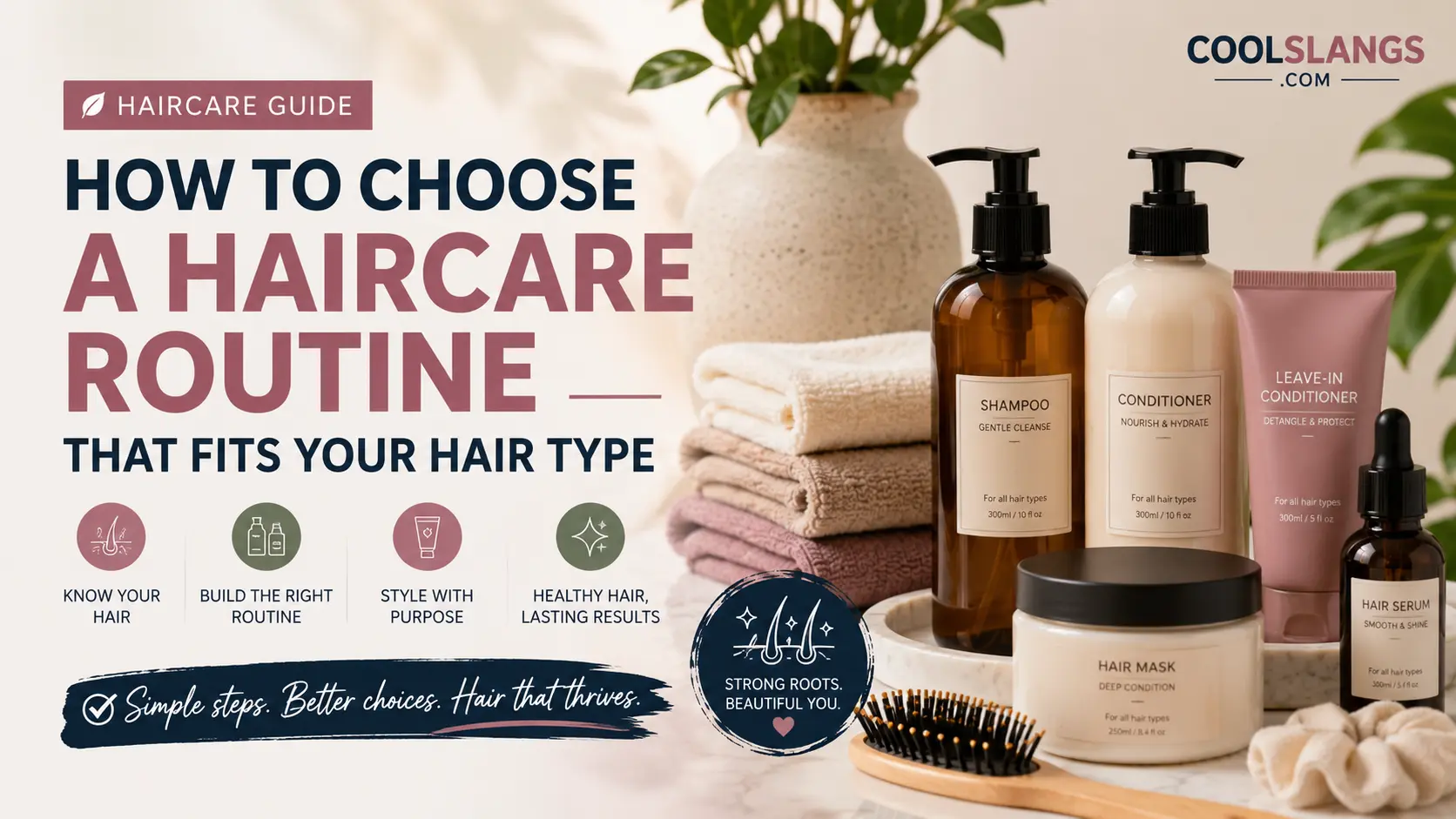
A good haircare routine has less to do with chasing trends and more to do with matching the right products and techniques to what your hair actually needs. For many people, the trickiest part is figuring out where hair styling products belong in that routine — and whether they’re genuinely helping or simply adding build-up on top of problems that better foundational care could solve. Getting there starts with understanding your hair’s unique profile.
Why Haircare Should Start With Hair Type
Hair type, texture, porosity, density, and scalp condition all play a role in how a routine should be structured. Styling works best when it supports hair health and manageability — not when it’s being used to paper over gaps in basic care. Before reaching for any product, it’s worth knowing what your hair is actually asking for.
Understanding the Factors That Affect Hair Needs
Strand texture — whether hair is straight, wavy, curly, or coily — directly influences volume, frizz, definition, and how readily products absorb. Curly and coily patterns, for instance, tend to shed moisture more quickly along each bend in the strand, which makes hydration a consistent priority.
Density and strand thickness are separate considerations. Fine strands are easily weighed down, so they respond far better to lightweight formulas, while thicker strands can typically handle richer, heavier products without going flat.
Porosity — how readily hair absorbs and holds onto moisture — is one of the most practical things to understand about your hair. Low-porosity hair resists absorption, so products tend to sit on the surface rather than penetrating the strand. High-porosity hair drinks moisture in quickly but loses it just as fast, often calling for more frequent conditioning. Medium porosity generally strikes the most balanced note between the two.
Scalp condition matters just as much. Oiliness, dryness, sensitivity, climate, and how active you are all shape how often you should be cleansing and what kind of styling support your hair genuinely needs.
Building a Simple Routine Step by Step
Cleansing should be matched to your scalp, not just your hair. If you regularly use heat tools or heavier styling products, occasional clarifying washes can help shift build-up — though clarifying shampoos are generally too stripping for everyday use.
Conditioning supports detangling, softness, and reduced breakage. Rinse-out conditioners work well for most hair types, while deep-conditioning treatments are especially valuable for curly or coily hair that needs sustained moisture. For fine hair, it’s usually best to apply conditioner from mid-lengths to ends only, keeping it away from the roots to avoid limpness.
Leave-in conditioners, heat protectants, and serums add an important layer of support before styling begins. They improve slip, reduce friction, and prime the hair to hold a style without placing unnecessary stress on the strand.
Key Takeaway: Build your routine in this order — cleanse for your scalp, condition for your strands, protect before heat or styling, then style for your desired outcome. Each step should set the next one up for success.
Where Styling Fits Into the Routine
Styling decisions should be goal-driven. Whether you’re after hold, definition, volume, smoothness, or frizz control, the right product is simply the one that delivers that specific result for your hair type — not the one with the most appealing packaging or the loudest marketing.
Mousses and lightweight sprays tend to suit fine or wavy hair well. Creams and gels work better for curly or coily textures that need both definition and moisture retention. Waxes and pomades offer finish and control but can feel heavy on finer strands. Common pitfalls include overapplying product, piling on too many finishing layers, and neglecting to cleanse thoroughly after repeated styling use.
How to Read Product Labels
Ingredients like humectants (which draw moisture in), emollients (which soften the strand), and polymers (which provide hold) each serve a distinct purpose. Silicones can add shine and tame frizz effectively, but they may require a clarifying shampoo to remove completely. Alcohols are worth examining closely — some are drying, while others are fatty and actually conditioning. No ingredient is inherently good or bad; what matters is whether it suits your hair’s specific needs.
Terms like “light hold,” “flexible control,” or “matte finish” do describe real performance differences, but marketing language can easily obscure what a product actually does in practice. Reading the full ingredient list alongside those claims gives you a much clearer picture.
Practical Guidance by Hair Type
Quick Checklist by Hair Type:
- Fine, straight hair: Lightweight shampoo, minimal root conditioning, volume-focused mousse or spray, avoid heavy creams
- Wavy hair: Frizz-controlling conditioner, lightweight cream or mousse, flexible hold to support shape without stiffness
- Curly or coily hair: Moisture-rich conditioner, leave-in support, layered styling products for definition; consistency over time makes a significant difference
Making a Routine Sustainable
The best haircare routine is one that’s simple, consistent, and genuinely suited to your hair and lifestyle. Styling products perform at their best when the hair underneath is already well-conditioned and managed. As a practical starting point, take a look at your current routine and identify one area — whether that’s cleansing frequency, conditioning depth, or the weight of your styling products — where a small, well-informed adjustment could make a real difference.

